
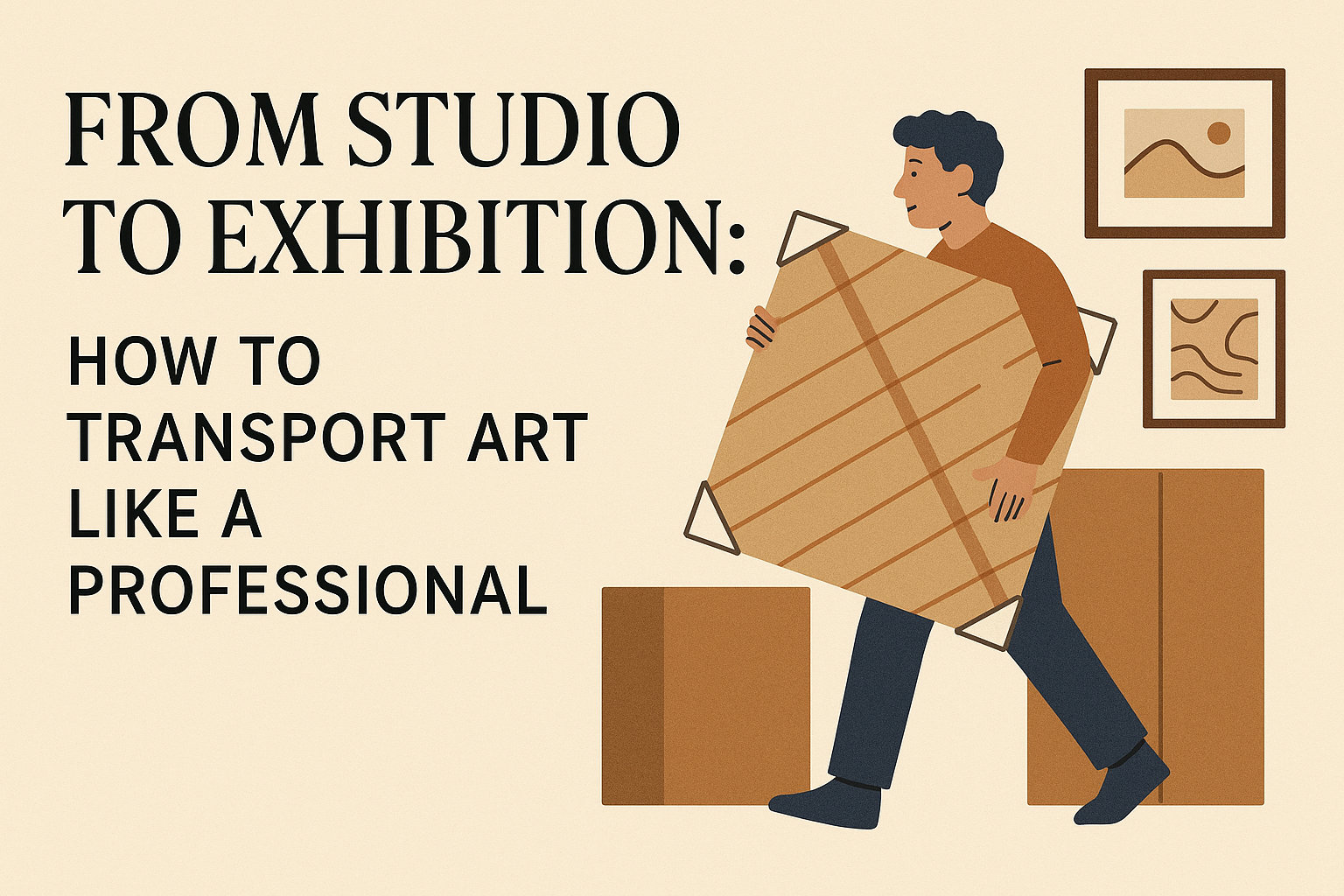
From Studio to Exhibition: How to Transport Art Like a Professional
Transporting artwork is one of the most nerve-racking parts of any creative journey. Whether you’re preparing for your first exhibition or sending multiple pieces to a gallery, one wrong move can result in scratches, tears, dents, or disastrous frame damage.
The good news? Professional-level art transport isn’t only for museums and major galleries — any artist can follow the same standards with the right preparation and packaging. In this guide, we’ll walk you through how to transport art like a professional, from studio packing to safe arrival at exhibition day.
1. Start With a Clean, Controlled Workspace
Before you wrap or pack anything, set up a clean space free from:
Dust
Moisture
Sharp tools
Pets or foot traffic
Even small particles can cling to fresh varnish or be pressed into a canvas during transit. Professionals always pack artwork in a controlled, clutter-free environment.
2. Handle Every Artwork With Careful Technique
Professional art handlers treat every piece — regardless of value — as fragile. That starts with simple habits:
Hold frames with two hands
Never touch the painted surface
Use cotton or nitrile gloves
Keep jewellery, belts, or zips away from the canvas
Rest artwork only on padded, soft surfaces
Adopting these habits dramatically reduces accidental scuffs or pressure marks.
3. Wrap the Artwork Using Archival Materials
Packing like a pro begins with the correct first layer of protection. Avoid newspaper, cling film, or rough plastics.
Use:
Glassine or acid-free tissue against the artwork
A moisture-resistant barrier (poly sheeting)
High-quality bubble wrap with the bubbles facing outward
Extra corner protectors for canvases and frames
Professionals never allow bubble wrap or plastic to touch the artwork directly — they always create an archival buffer.
4. Stabilise the Art With Proper Internal Padding
Keeping artwork still during transit is one of the most important steps. Shifting is the number-one cause of transportation damage.
Use:
Cut-to-size foam pads
Custom corner blocks
Padded supports to lift the artwork off the crate walls
Professional movers design the internal support to prevent any movement whatsoever.
5. Use a Professional-Grade Art Crate
While small pieces can travel in reinforced art boxes, any medium or large canvas deserves a proper crate — especially during exhibition season.
A custom-built art crate from ArtCrates provides:
A perfect fit for your artwork
Shock-absorbing foam lining
Reinforced timber structure
Moisture resistance
Compliance with international shipping (ISPM 15)
Safe opening/closing for gallery teams
This is the single biggest upgrade you can make if you want museum-level safety.
Professionals never rely on generic cardboard boxes for exhibition transport — a custom crate makes all the difference.
6. Label Clearly and Professionally
Art professionals use clear, standardised labelling so couriers and gallery teams handle pieces correctly.
Include:
“Fragile”
“This Way Up” arrows
Your name and contact details
Exhibition venue address
Piece title and inventory number
A clearly labelled crate helps prevent mishandling and speeds up installation at the venue.
7. Choose a Courier Experienced in Art Transport
Your packaging is only half the journey. Professional couriers understand:
How to load/unload art safely
Required climate conditions
The importance of soft straps and proper securing
How to avoid pressure points
Many UK artists use fine-art couriers like Momart or Martinspeed — but even standard couriers can work safely if the artwork is protected in a solid crate.
8. Prepare for Safe Unpacking at the Exhibition
Once the artwork arrives, the process isn’t finished. Professionals always unpack carefully.
Tips:
Inspect crate and artwork before signing
Photograph the condition on arrival
Use gloves and soft tools when unwrapping
Lay materials out neatly for re-packing later
Save all screws and internal supports
Good unpacking habits mean easier re-packing for the return trip.
Transport Your Art with Confidence
Moving artwork from studio to exhibition doesn’t have to feel stressful. With archival wrapping, proper padding, clear labelling, and a high-quality crate, you can protect your work like a seasoned professional — no matter the distance.
At ArtCrates, we design and build custom wooden art crates trusted by artists, galleries, and collectors across the UK. Whether you’re transporting a small canvas or a large centrepiece for an exhibition, we create the perfect crate for maximum protection.